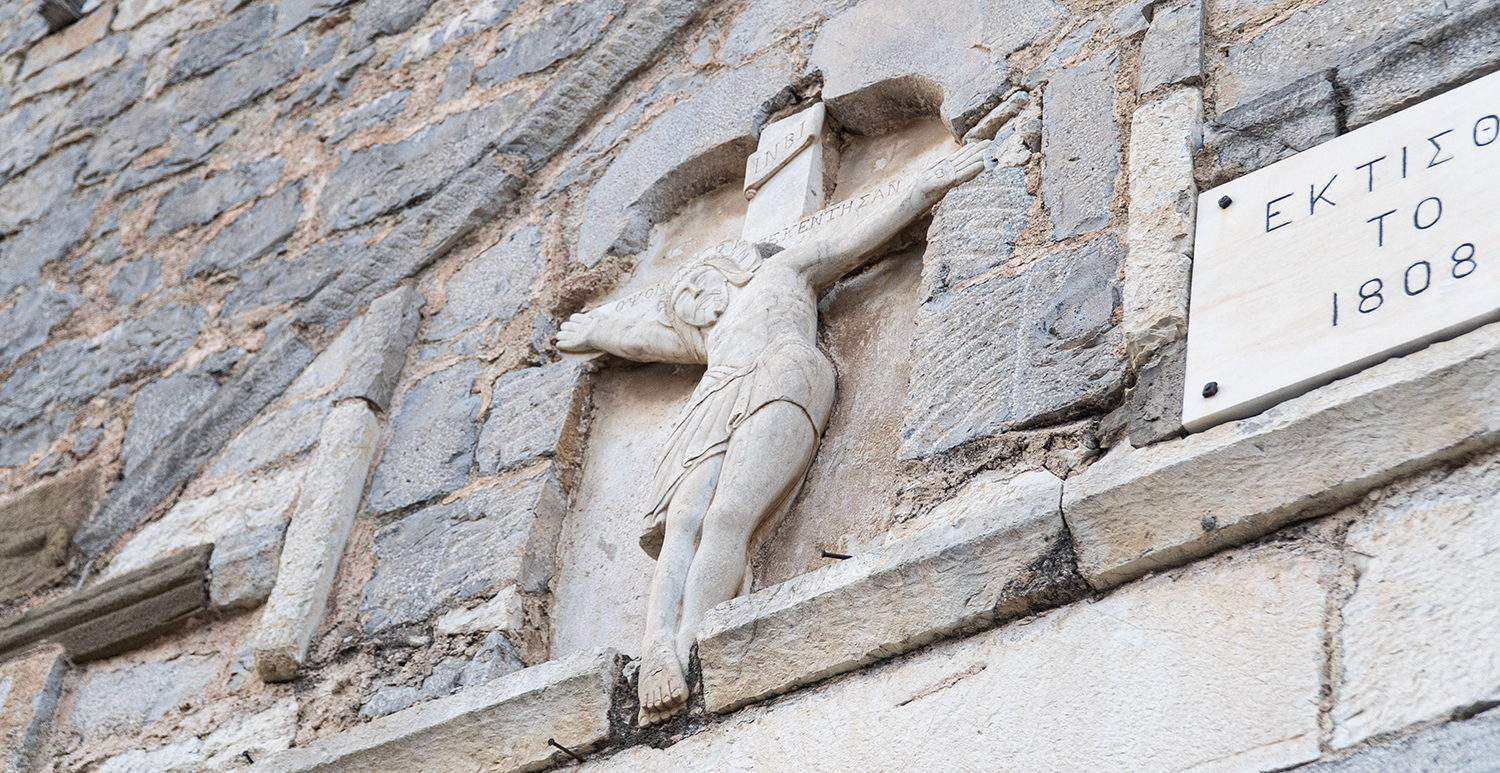
The art of stone carving is among the world’s oldest forms of construction and remained the predominant building method until the mid-20th century, when materials like steel became widespread (Cheirchanteri 1). However, despite the shift to modern building materials, stone carving remains a vital piece of cultural heritage across the globe, especially in Greece. Of Τhe Αssociation “Friends of Traditional Architecture – Blossoming Stones,” an organization dedicated to the conservation of stone carving, defines its role as a “tangible culture that characterized the transition from pre-industrial to modern and contemporary Greece.” While “the art of stone carving” may evoke visions of grand monuments like the Parthenon, stone carving (also known as stonemasonry) was essential in the construction of common structures such as churches and multi-generational family homes.
While it is closely associated with Greek culture, the art of stone carving did not originate from a single unified source. Instead, it developed from various schools across Greece, including schools in Lagkadia, Epirus, and Macedonia. As Of Τhe Αssociation “Friends of Traditional Architecture – Blossoming Stones” notes, it is difficult to identify which work belongs to which school due to a lack of a personal signature from the stonecarvers. Additionally, the schools interacted with one another, building upon and combining styles, contributing to the richness of the Greek tradition.
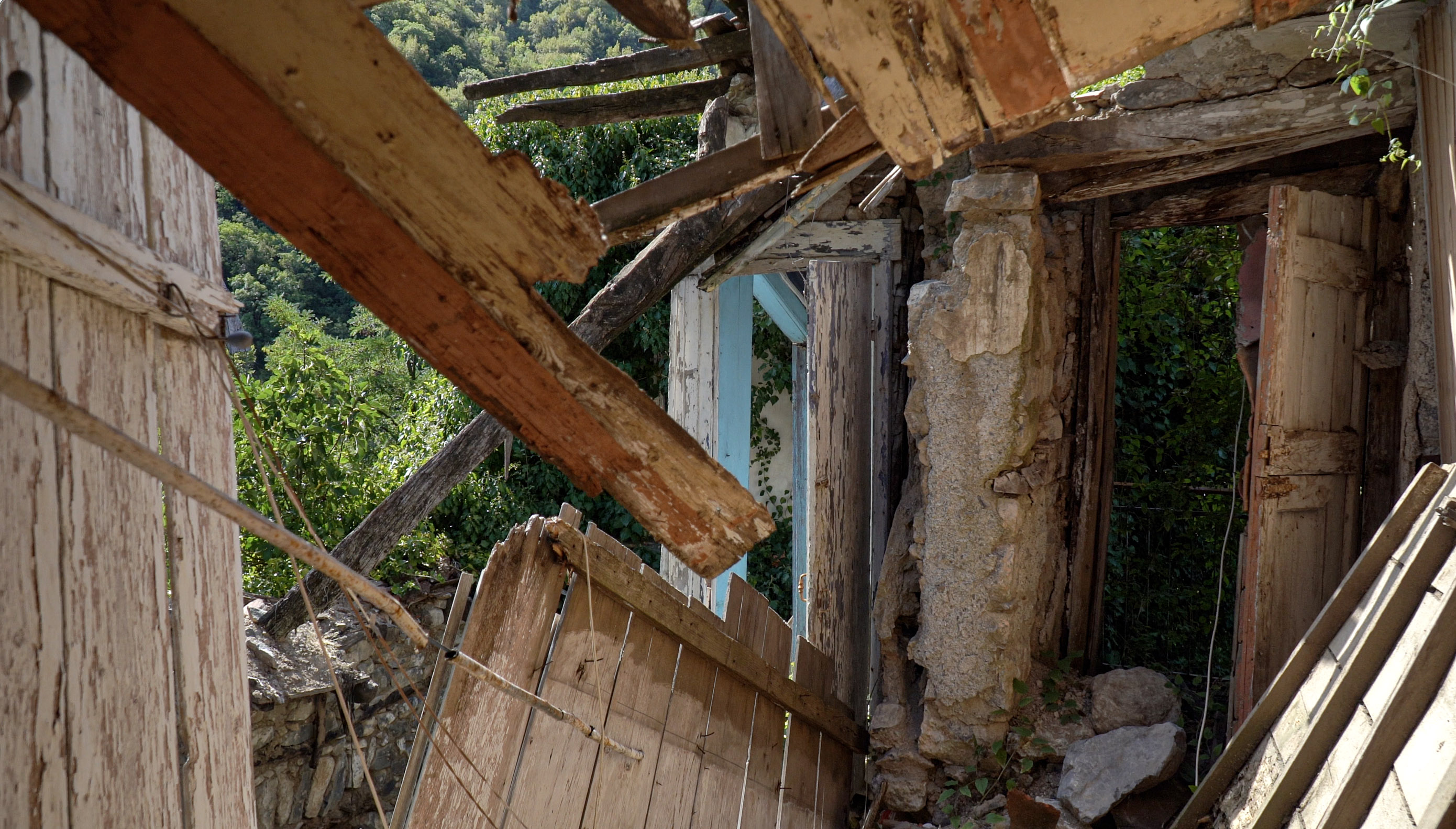
Despite the prominence of stone carving in the architectural and cultural worlds, it is becoming a lost art. Dr. Vassilis Ganiatsas, a professor of architecture at the National Technical College of Athens, Greece, emphasizes that a lack of connection between theoretical knowledge and hands-on practice is leading to the art’s decline over time. This divide is exacerbated due to stone carving’s status as an oral tradition. If both forms of knowledge are not passed down through families and generations, many stone carving techniques cannot be recovered. Modern building materials like steel have become widely used instead of stonemasonry, which could create a perceived lack of incentive to pass the art down. Similar to steel, cement has further accelerated the loss of stone carving due to its convenience, despite being far less durable than stone. The flaws of cement are evident in places like Lagkadia—where a villa’s structure was damaged due to cement not allowing moisture out of the building.
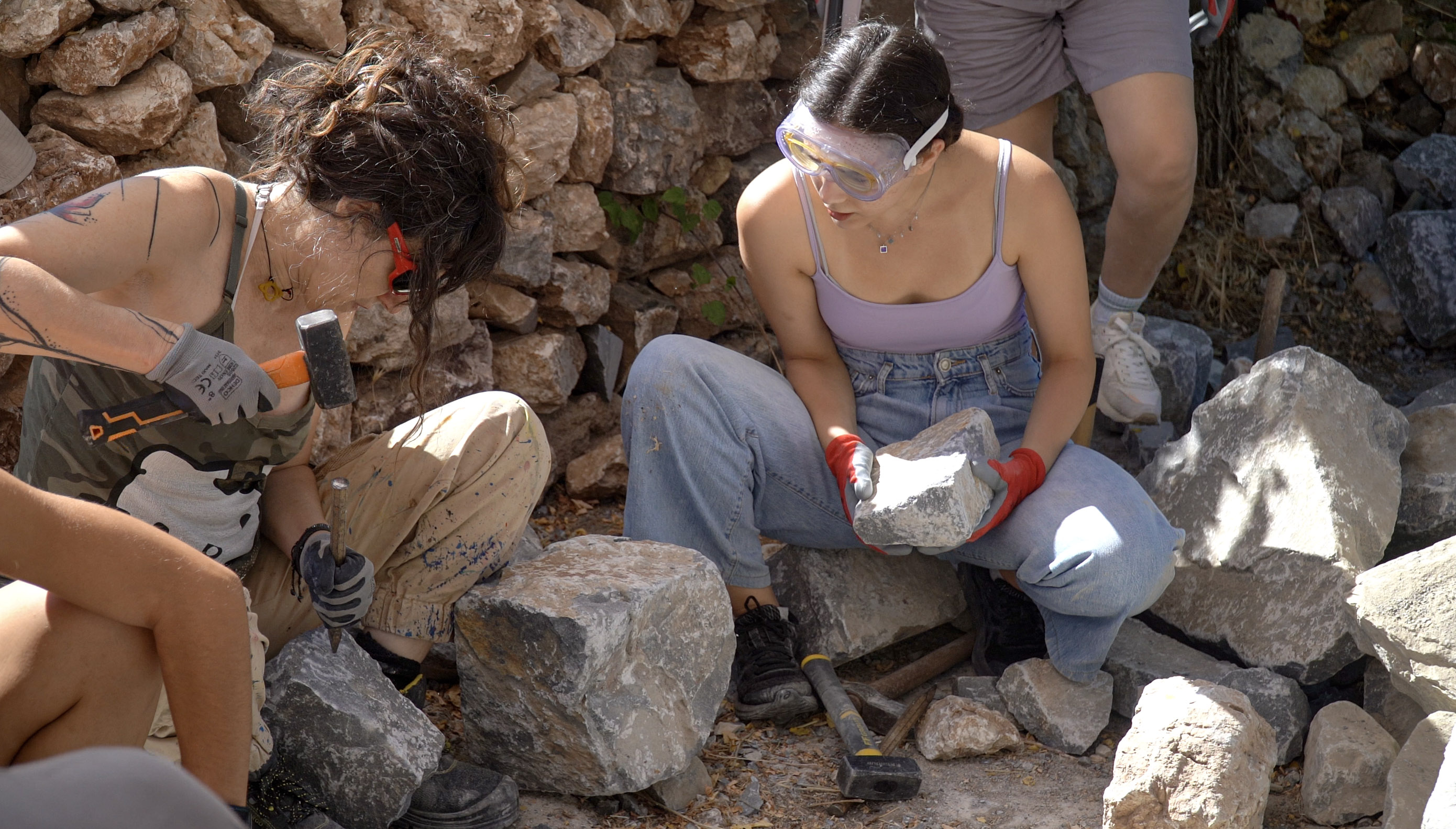
It is crucial to protect stone carving from being lost altogether, as it is imperative for structural and cultural preservation. Demonstrated by the villa in Lagkadia, currently being restored by a team of stone masons led by Panagiotis Gkiokas, stonemasonry is essential to build and upkeep structures that are irreplaceable pieces of cultural heritage. As Of Τhe Αssociation “Friends of Traditional Architecture – Blossoming Stones,” elaborates, “The protection and conservation of the traditional constructions that they [stonecarvers] produced involves not only the buildings per se but, in addition, preserves the knowledge treasured in them, as an intangible cultural value.” Construction, culture, and the preservation of stone carving are explicitly linked. The art of stone carving is also a channel for human cultural value and creativity. Experts in the field of stone carving emphasize the connection between stone carving and the environment, demonstrating that the art of stone carving directly links the artist and the world around them. Echoing this sentiment and further elaborating on stone carving’s vital impacts, Dr. Ganiatsas explains that stone masonry carries both cultural weight and a continuous narrative that must be preserved. Kostas Karaloslos, a stonecarver involved with Blossoming Stones, strives to keep the art alive due to the universality of the stone. To both Ganiatsas and Karaloslos, stones are vessels of cultural and human existence that can not be replaced. Therefore, stone carving’s irreplaceable structural, cultural, and human value justifies collaboration across individual, communal, and global systems to preserve the art form.
Cheirchanteri, Georgia G. “The Stone Masonry Contribution in Greek Industrial Buildings’ Typology and Construction Durability (Late 19th to Early 20th Century).” DBMC 2020: XV International Conference on Durability of Building Materials and Components, 2020. Scipedia, www.scipedia.com/wd/images/c/ce/Draft_Content_191585555p691.pdf. PDF.
Of The Association “Friends of Traditional Architecture – Blossoming Stones.” Anthitís Petras, https://anthitispetras.gr/index.php/en/